A raise generates a surprising amount of paperwork before a single dollar moves the deck itself, a financial model, a cap table, incorporation documents, prior agreements, sometimes a full due diligence folder once an investor gets serious. Most of it needs to reach people outside your company, some of it only briefly, and almost none of it belongs sitting in an email thread indefinitely.
You don't need a full data room for every stage
Dedicated data-room software exists for a reason, but it's built for later-stage diligence with dozens of reviewers and granular permission tiers overkill for a seed-stage founder sending a deck to twenty angels, or a Series A company sharing a model with three VCs who haven't signed anything yet. For most of a raise, what you actually need is simpler: a link you control, that you can password-protect, track, and shut off, without onboarding every investor onto a new platform just to glance at twelve slides.
The deck: version control matters more than security
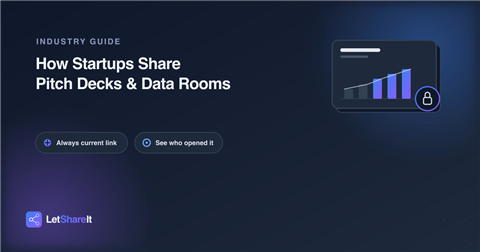
The deck changes constantly during a raise a metric gets updated, a slide gets cut after the first few meetings go badly, the ask changes once you see what the market will bear. Sending it as an email attachment means every investor you've already pitched is holding a version that's now out of date, with no way for you to update what they have. A link solves this cleanly: update the file behind the same link, and the next time anyone opens it, they see the current version, not whatever you sent three weeks ago.
Cap tables and financial models: who's actually allowed to see this
These documents matter more than the deck in terms of exposure a cap table reveals exactly who else is on it and at what terms, which isn't something you want circulating past the person you sent it to. A password on the link, sent separately from the link itself, means the file isn't usable just because the URL leaked or got forwarded. Setting an expiration on it closes access automatically once that conversation ends, instead of relying on everyone involved to remember to stop looking.
Due diligence folders, once things get serious
Once an investor moves to real diligence, the document count jumps incorporation papers, IP assignments, customer contracts, prior financing docs. This is the point where a single, organized link genuinely earns its keep: one place for the whole folder, rather than a dozen individual email attachments arriving over several days as you dig each document out of a different place.
Knowing who actually opened what
A "circling back" email is a lot easier to send when you know whether someone has actually looked at the deck yet. Download/view visibility on a shared link gives you that signal directly, instead of guessing from how fast someone replies genuinely useful during a raise, where knowing which investors have engaged shapes who you follow up with first.
What to look for
- No account required for investors. A VC associate shouldn't need to register anywhere to open a deck.
- Password protection for anything beyond the deck, cap tables and financial models specifically.
- Expiration you control, so access doesn't outlive the conversation.
- Visibility into who's opened a link, as a practical signal, not just a security feature.
On Letshareit, a deck or a full diligence folder goes out as one link, no account required on the investor's end, with password protection available on every plan. New accounts also get a 14-day Basic trial enough to run an entire raise on the higher limits before deciding if it's worth keeping.